
Anzac Day Kanchanaburi Tour: A Commemorative Journey Through History
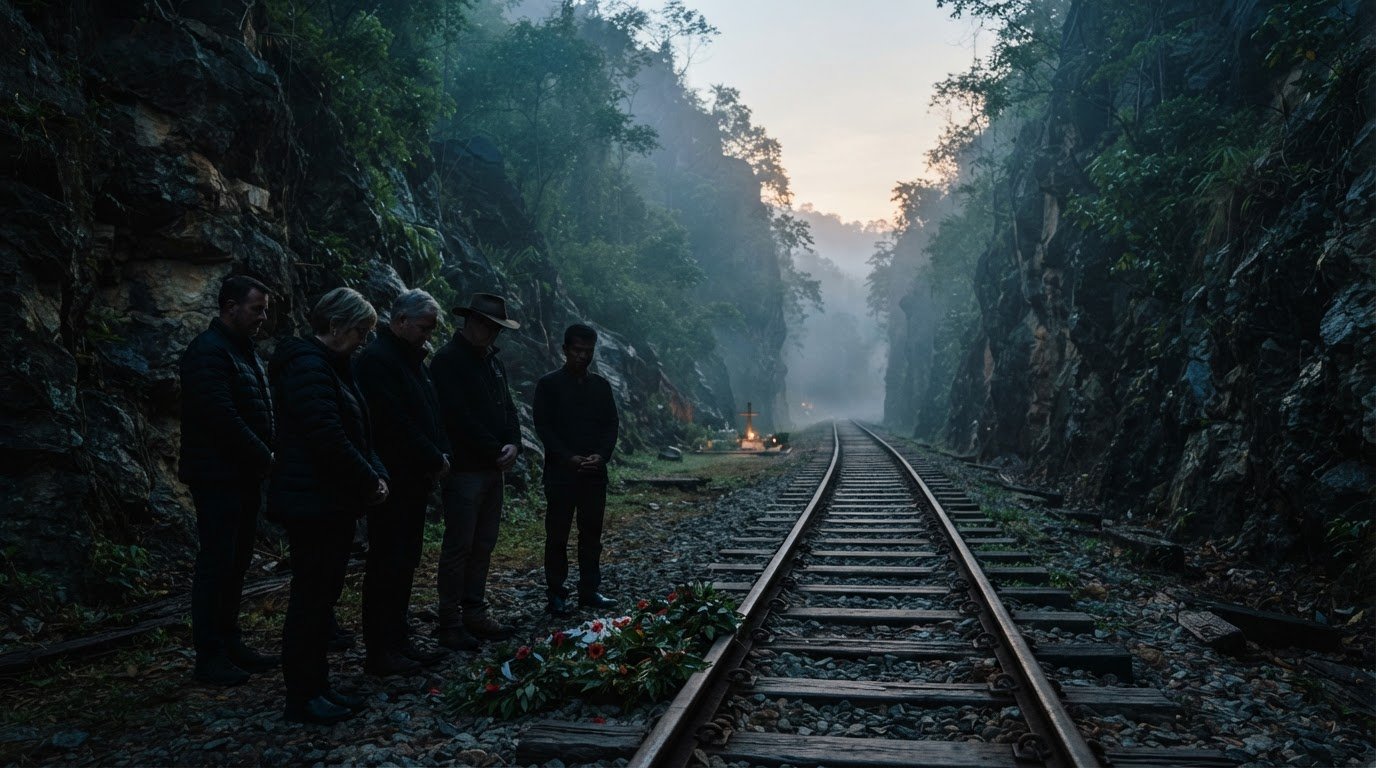
What does Anzac Day remembrance mean beside the railway built through the suffering of prisoners of war? An Anzac Day Kanchanaburi tour brings commemoration and history together, connecting a shared moment of reflection with places that hold the stories of Australian and Allied prisoners.
For many Australians, Anzac Day is a time to pause, remember and honour service. In Kanchanaburi, sites such as Hellfire Pass, railway heritage locations and Kanchanaburi War Cemetery offer different perspectives on the people who endured the railway’s construction and those who never returned home.
This guide explains how the region’s historic places relate to Anzac Day, what to consider when choosing a fully escorted tour with expert historical guidance, and how to prepare for the physical, emotional and practical demands of visiting. The aim is to help you take part with care, understanding and respect.
Key Takeaways
- Approach the journey as a commemorative experience connecting Anzac Day with Kanchanaburi’s wartime heritage.
- Learn how the Thai-Burma Railway and Hellfire Pass reveal the human cost of the railway’s construction.
- Consider how memorial visits, dawn services and expert historical guidance can shape an informed act of remembrance.
- Prepare for the itinerary by considering mobility, suitable clothing and time for reflection.
- Assess an Anzac Day Kanchanaburi tour by its commemorative purpose, historical guidance, escorting and itinerary clarity.
Understand what an Anzac Day Kanchanaburi tour is designed to commemorate
An Anzac Day Kanchanaburi tour is a commemorative journey, not simply a sightseeing trip. It connects Anzac Day remembrance with wartime heritage, including the history of Allied prisoners of war and the Thai-Burma Railway.
When comparing tours, look at how remembrance shapes the itinerary. Check which memorials and heritage sites are included, how historical interpretation is delivered, and how the programme makes room for a service and reflection. These details help you assess whether the journey’s focus matches your reasons for travelling.
Why Kanchanaburi holds significance for wartime remembrance
Kanchanaburi’s wartime history is closely associated with the railway built under Japanese military control during the Second World War. Allied prisoners of war and Asian labourers endured forced labour and severe hardship during its construction. The history of the Burma-Thailand Railway provides wider context for the project and its human cost.
Hellfire Pass and Kanchanaburi War Cemetery give this history a physical presence. These places invite visitors to consider the people whose lives were shaped or lost through the railway’s construction and connect that history with Anzac Day remembrance. Historical guidance can place each site within the broader story, while leaving space for quiet reflection.
What makes an Anzac Day journey different from a general tour
A general sightseeing tour may include well-known attractions as part of a broad itinerary. A commemorative journey puts wartime history and remembrance at its centre. Visits are approached with attention to service, sacrifice and human loss, rather than as a sequence of photo stops.
Historical interpretation matters, too. A guide can connect the railway, memorials and individual experiences, adding context that a site visit alone may not provide. This helps travellers understand why a place matters, as well as what happened there.
Commemoration calls for care. Historic War Tours’ Anzac Day journeys include dawn services and guided commemorative visits to significant military sites. Review the itinerary to understand the planned visits and schedule, then take time at each place to listen, learn and remember respectfully.
Connect the Thai-Burma Railway and Hellfire Pass with the human story
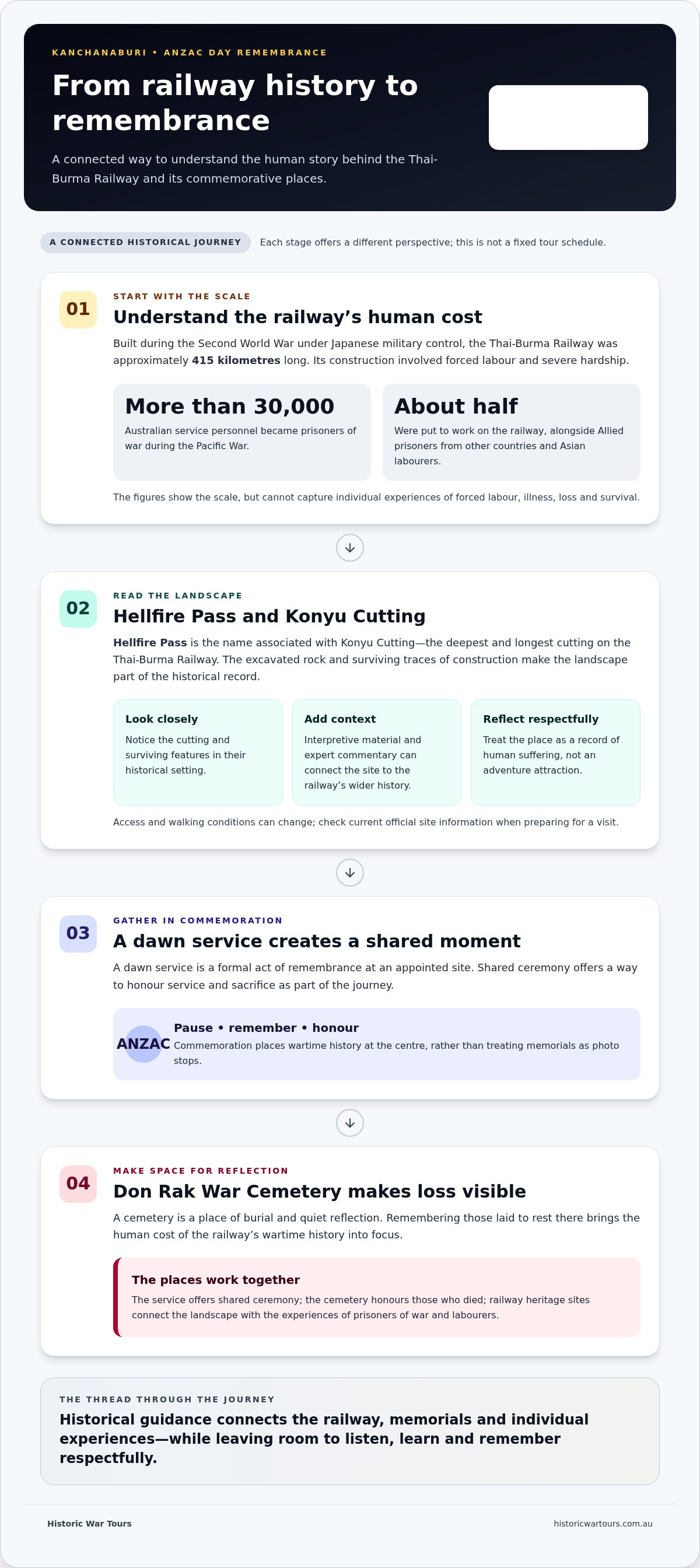
The railway’s history is larger than any single memorial or national account. Built during the Second World War under Japanese military control, the Thai-Burma Railway was approximately 415 kilometres long. More than 30,000 Australian service personnel became prisoners of war during the Pacific War, and about half were put to work on the railway, alongside Allied prisoners from other countries and Asian labourers. These figures show the scale of the project, but cannot capture individual experiences of forced labour, illness, loss and survival.
What visitors should understand about the Thai-Burma Railway
Popular accounts can focus on Australian prisoners and the name “Death Railway”. Those stories are important, but a fuller understanding also recognises the many Allied prisoners of war and Asian labourers involved, each with distinct experiences. The National Museum of Australia’s account of Australia’s connection to the railway provides national context while acknowledging the people behind its legacy.
Historical interpretation helps distinguish the railway’s broader construction from the specific places visited in Kanchanaburi. It also shows why the railway should not be viewed as an isolated wartime feat: it was built through coercion and immense human suffering.
How Hellfire Pass and Konyu Cutting deepen the historical account
Hellfire Pass is the name associated with Konyu Cutting, the deepest and longest cutting on the Thai-Burma Railway. Its excavated rock and surviving traces of construction make the landscape part of the historical record. This is a place for considered attention, not an adventure attraction.
Interpretive material and expert commentary can help visitors understand what they are seeing and place the cutting within the railway’s wider history. The physical setting may prompt reflection, but it should not turn suffering into spectacle. Take time to listen, read and consider the lives behind the landscape. Check current official site information when preparing for a visit, as access and walking conditions can change.
An Anzac Day Kanchanaburi tour connects these places with the experiences of prisoners of war and labourers. For a guided exploration of the railway’s heritage, discover Burma-Thailand railway tours.
Assess the memorials, service and historical guidance on the journey
Memorials, a dawn service and railway heritage sites each support remembrance in a different way. A service gathers people for a shared act of commemoration; a cemetery makes loss visible through names and graves; railway sites explain the wartime conditions behind that loss. Historic War Tours’ Anzac Day journeys include dawn services and guided commemorative visits, bringing these experiences into a connected historical journey.
| Experience | Purpose and setting | What visitors may learn |
|---|---|---|
| Dawn service | A formal act of remembrance at an appointed site. | How shared ceremony honours service and sacrifice. |
| Don Rak War Cemetery | A place of burial and quiet reflection. | The human cost of the railway’s wartime history, remembered through those laid to rest there. |
| Railway heritage stop | A historic site connected to the railway’s construction. | How the landscape and its surviving features relate to the experiences of prisoners of war and labourers. |
What a dawn service contributes to the commemorative journey
A dawn service marks Anzac Day through shared silence, words of remembrance and ceremony. Its setting can deepen the experience, but its meaning comes from honouring those who served and those who endured loss. Historic War Tours’ Anzac Day journeys include dawn services. Follow the organisers’ guidance, participate respectfully and leave room for others to reflect.
Why Don Rak War Cemetery calls for a different kind of visit
Don Rak War Cemetery is a burial place and memorial, not simply another stop on a sightseeing route. Nearly 7,000 prisoners of war are buried there. Its ordered graves and commemorative markers invite quiet attention to individual lives within a much wider wartime history. Follow site guidance, keep noise low and treat the grounds with care.
Expert historical commentary can connect these settings. A guide can explain how a cemetery, ceremony and railway site relate to one another, adding context that signs alone may not provide. This helps visitors understand the different ways each place carries memory. Listen closely, ask considered questions at appropriate moments and allow space for reflection between visits.
Prepare thoughtfully for travel, site visits and Anzac Day
Preparation can help you approach the journey with confidence and respect. Before departure, read the itinerary, consider the physical demands of each visit, pack for the conditions and leave yourself time to absorb the history. An Anzac Day Kanchanaburi tour combines formal commemoration with outdoor heritage visits, so practical readiness supports a more attentive experience.
Plan for site conditions and personal comfort
Start by reviewing the itinerary. Note where walking is involved and whether surfaces may be uneven, then consider how the pace and access arrangements suit your mobility. Use current site information and the tour itinerary to understand the visits rather than relying on assumptions about distances or facilities.
Choose comfortable, secure footwear. Sun protection and water may also be useful for outdoor visits, depending on the programme and conditions. Pack personal essentials and allow for changes in the schedule. If you have accessibility needs, consider them before travelling so you can assess the itinerary and planned site visits in advance.
For current travel advice, entry requirements and health guidance, consult official Australian Government sources such as Smartraveller, alongside relevant Thai government information. Requirements and conditions can change, so review the guidance close to departure and follow what applies to your circumstances.
Approach commemoration with care and historical curiosity
Preparation also means understanding the purpose of the visit. Read reliable historical material beforehand so names, places and events have some context. You don’t need to arrive with a prescribed response. Make space to listen, reflect and learn at your own pace.
At a service or memorial, follow organisers’ and site staff’s guidance. Keep conversation and movement considerate, and give others room for their own reflection. The history of prisoners of war, military service and loss can carry emotional weight. Notice your own response without feeling obliged to explain it or compare it with anyone else’s.
A fully escorted journey with expert historical guidance brings practical arrangements and historical interpretation together. This support can be valuable when moving between memorial settings and railway heritage sites, while keeping the purpose of each visit clear.
To prepare for a journey centred on remembrance and wartime heritage, explore fully escorted Anzac Day tours.
Choose a fully escorted Anzac Day Kanchanaburi tour with confidence
Choose a journey by its purpose, not simply by the number of places on its itinerary. A commemorative tour should put remembrance first, with historical context and time at significant sites shaping the experience rather than being added to general sightseeing.
As you assess an Anzac Day Kanchanaburi tour, consider whether its approach matches your reasons for travelling. Look for:
- Expert historical guidance: Commentary should connect railway heritage sites and memorials with the broader wartime history, including the experiences of Allied prisoners of war.
- A clear commemorative purpose: The itinerary should show how remembrance informs the journey, rather than treating a service or memorial visit as a convenient stop.
- Thoughtful pacing: Consider whether the schedule allows time to understand each place and reflect, as well as move between sites.
- Clear itinerary details: Look for an outline of planned visits and service arrangements, and use current information to prepare for site access.
A fully escorted group journey brings travel arrangements and heritage interpretation together. An escort supports the group as it follows the programme, while expert historical commentary links places and events. Together, these elements make the experience easier to follow and give each visit a clearer place in the story. The value lies not in covering the most ground, but in understanding why each stop matters.
How Historic War Tours supports a considered journey
Historic War Tours organises fully escorted military history journeys for Australian travellers, including Anzac Day commemorative tours and Burma-Thailand railway tours. The journeys include expert historical guidance and visits to significant wartime heritage sites in Southeast Asia. This approach connects remembrance and the railway’s history with the human experiences behind it.
For travellers seeking a purpose-led way to mark Anzac Day in Kanchanaburi, Historic War Tours’ commemorative journeys provide a guided way to explore the region’s wartime heritage. Explore Anzac Day journeys with Historic War Tours.
Carry remembrance forward with a considered journey
A meaningful visit to Kanchanaburi brings Anzac Day remembrance into conversation with the Thai-Burma Railway, its memorials and the lives affected by its construction. The places matter, as does the care and context with which you approach them.
When choosing an Anzac Day Kanchanaburi tour, look for a clear commemorative purpose, expert historical guidance and an itinerary that leaves room to reflect. Thoughtful preparation can also help you manage the physical demands of site visits and take part respectfully.
Historic War Tours is an Australian-owned operator focused on military history journeys. Its fully escorted group tours provide expert historical guidance on Anzac Day commemorative journeys and Burma-Thailand railway tours, connecting significant sites with the stories they hold.
Explore Anzac Day journeys with Historic War Tours and consider how a guided journey can support your act of remembrance. Travel with curiosity, care and respect for the people whose histories are remembered.
Frequently Asked Questions
What does an Anzac Day Kanchanaburi tour usually focus on?
An Anzac Day Kanchanaburi tour centres on remembrance and the wartime history of the Thai-Burma Railway. Historic War Tours’ Anzac Day journeys include dawn services and guided commemorative visits to significant military sites. The journey helps travellers understand the experiences of Allied prisoners of war and honour those who served and suffered. Read the itinerary for the planned visits and schedule.
Can you attend an Anzac Day dawn service in Kanchanaburi?
Yes. A dawn service is held at Hellfire Pass for Anzac Day, and Historic War Tours’ Anzac Day journeys include dawn services. Follow the tour itinerary and official announcements for programme, access and timing details. At the service, follow organisers’ directions and allow space for others to participate and reflect. A service is a shared act of remembrance, not simply another scheduled attraction.
What is the historical significance of Hellfire Pass?
Hellfire Pass is a cutting on the Thai-Burma Railway associated with the forced labour of prisoners of war during the Second World War. It is the railway’s deepest and longest cutting. Its exposed rock and surviving traces offer a tangible connection to the harsh work involved in building the railway. Interpretive information and historical guidance help visitors understand the site without treating suffering as spectacle.
Is a Kanchanaburi Anzac Day tour suitable for people with limited mobility?
Suitability depends on the tour itinerary, site access and each traveller’s mobility needs. Some heritage visits involve walking or uneven ground, and access conditions can change. Before departure, review the itinerary and current information for each site, and consider walking distances, surfaces and the pace of visits. A fully escorted tour provides group support and historical guidance, but it doesn’t remove the need to assess whether the physical demands suit you.
How does a fully escorted Anzac Day tour differ from independent travel?
A fully escorted tour brings group travel arrangements and expert historical guidance together in a planned journey. The escort supports travellers as they follow the programme, while commentary links memorials and railway heritage sites to their wartime context. Independent travel requires visitors to organise their own transport, visits and interpretation. For those planning their own journey or looking for someone to share the experience, Travel Companion Hub provides a platform to connect with verified companions and local guides. An escorted journey offers structure and shared remembrance for travellers who value guidance across the itinerary.
What should I wear and bring when visiting Kanchanaburi war memorials?
Wear comfortable, secure footwear suitable for walking, and choose clothing that feels respectful at memorials and services. Sun protection and drinking water may be useful for outdoor visits, depending on the itinerary and conditions. Check current site guidance for specific expectations, and bring the personal items you need during the day. Practical comfort can help you focus on the history and take part with care.
Why is the Thai-Burma Railway important to Anzac Day remembrance?
The Thai-Burma Railway is central to remembrance because Allied prisoners of war, including Australians, were forced to work on its construction during the Second World War. The railway’s history gives context to memorials and heritage sites across the region, connecting remembrance with the human experiences behind it. Learning this history helps visitors consider military service alongside the hardship, loss and endurance of prisoners and labourers.